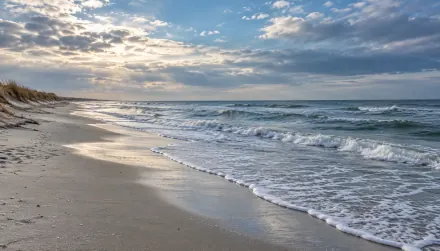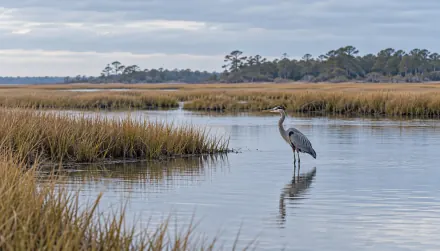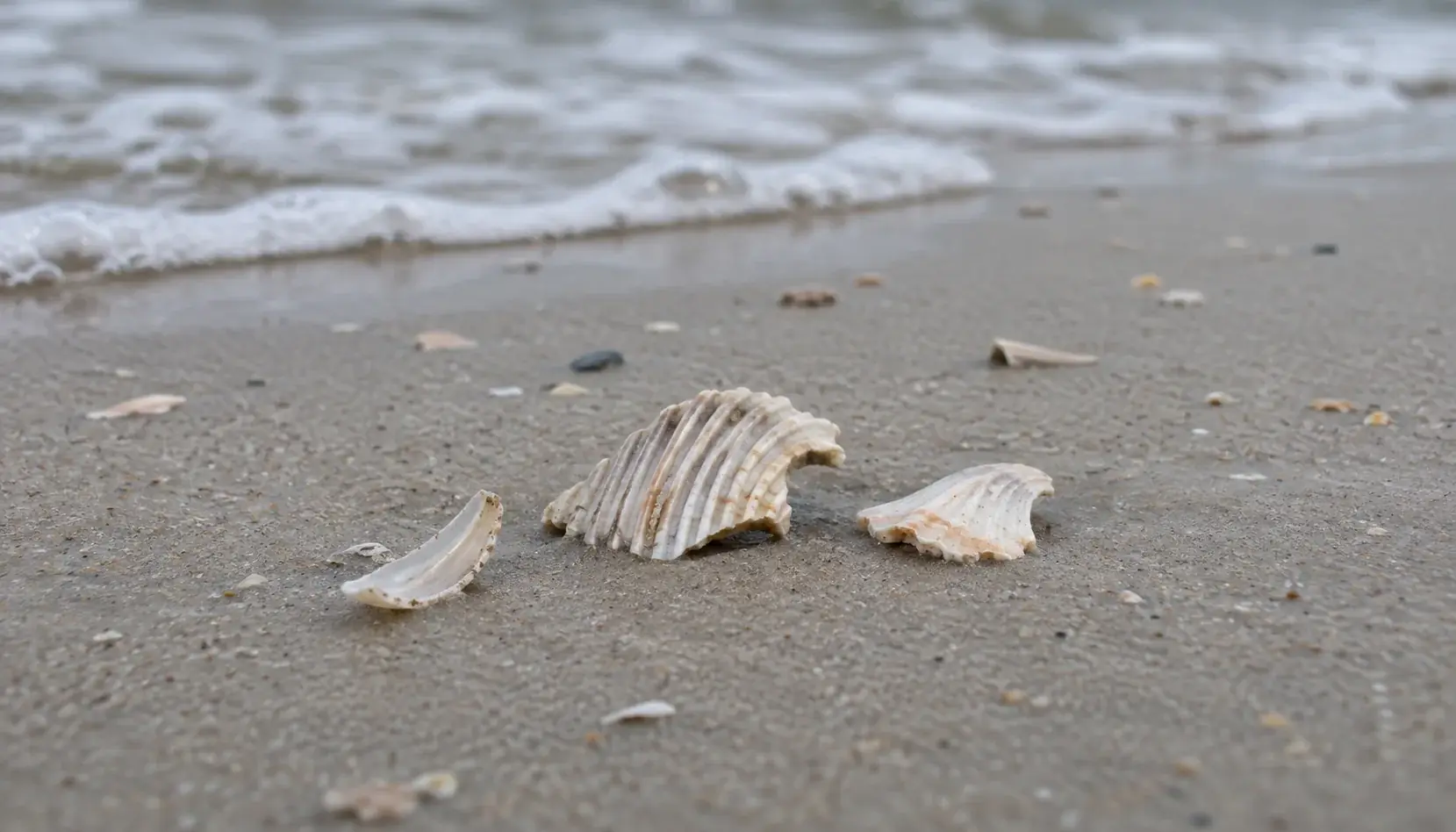
Start at Wrightsville Beach Access 16 if you want restrooms close to the sand, or follow the boardwalk at Fort Fisher State Recreation Area to look for shells on the ocean side of the park. Bring a phone for shell photos and leave what you find in place unless the town or park confirms you can take an empty shell from that stretch.
Two public accesses for a short shell walk
Pick the access that fits your group. Each works as an out-and-back, so you can shorten the walk if the sand is soft or the wind picks up. The facilities below come from the Wrightsville Beach public access directory and the Fort Fisher State Recreation Area visitor information and park map.
| Starting point | Facilities | Walking conditions | Before collecting |
|---|---|---|---|
| Wrightsville Beach Access 16, 25 East Salisbury Street | Parking, gazebo, restrooms and shower | Sand beyond the public crossover. Town parking rules apply. | Confirm with the town for the stretch you plan to walk. |
| Fort Fisher State Recreation Area, 1000 Loggerhead Road, Kure Beach | Parking, restrooms, foot rinse and boardwalk to the beach | Natural sand beyond the boardwalk. Check park gates and closures. Watch for vehicles on sections open to four-wheel drive. | Confirm with the park office. State park resource protections apply. |
Wrightsville Beach from East Salisbury Street
Access 16 is a good fit when you want to make a restroom stop before starting or need an easy meeting point for a group. The town lists the restrooms here as open daily from 7 a.m. to 9 p.m. year-round. Set the gazebo as your meeting point before anyone heads down to the sand. Once you’re on the beach, look back at the crossover and pick out the way back while it’s still close.
The town lists the access as ADA accessible. If your group needs a firm surface, check where the access meets the sand before setting out. The town’s regular paid parking season runs March 1 through October 31, with exceptions. Read the signs at the lot, including in winter. The Wrightsville Beach first-visit guide covers beach rules beyond this stretch, and the Wilmington-area beach parking guide compares the towns if you’re still choosing where to go.
Fort Fisher from Loggerhead Road
Park at the recreation area and follow the boardwalk over the dunes to the ocean. The park offers beach wheelchairs. Call ahead if you need one or want to ask about the current approach to the sand. Ordinary pedestrian day use is free. The park lists its main gate hours as 8 a.m. to 6 p.m. from November through February, with a Christmas Day closure. Plan to get back to the lot before the gates lock.
You can turn back while the boardwalk is still in view. The park’s beach trail description warns walkers about four-wheel-drive traffic and marked nesting areas. Give vehicles space and stay outside posted closures. If you’re navigating by name, use Fort Fisher State Recreation Area at Loggerhead Road. The Fort Fisher State Historic Site has its own entrance on Fort Fisher Boulevard South, and Zeke’s Island Reserve is a separate managed area farther along the coast. Check the area’s beach rules for dogs before bringing one, especially if your walk starts at the park’s swim beach.
Shell shapes you can recognize on the sand
Slow down where bits of shell are already visible on the open beach, clear of the waves. Start with one detail you can see from above. A spiral, a row of ribs or a hinge can give you enough to narrow the possibilities, even when all you have is part of a shell.
- A round spiral. A smooth, rounded shell with a low spiral can be a moon snail. The broad, rounded shape is a clue even when the opening is partly buried.
- An elongated spiral. Look for a taper at one end. A row of knobs around the widest part points toward a knobbed whelk when enough of the shell survives to see its shape.
- Ribs that fan out from a hinge. A rounded, roughly triangular half shell with strong ribs could be a cockle. Several kinds of bivalve have ribs, so keep the identification broad if you only see a fragment.
- A small wedge. A coquina is a tiny clam with a hinge set off to one side. Its shell can show bands or rays of color, but start with the shape because the colors vary.
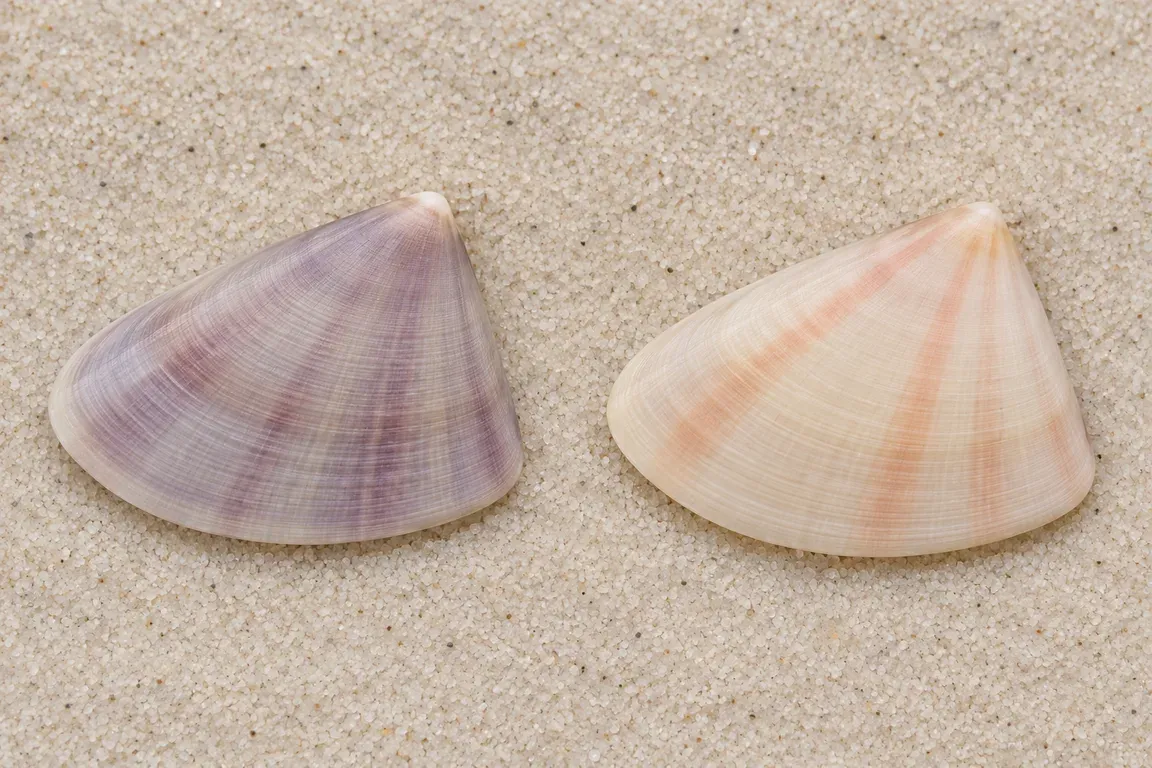
Coquina shells in a generated close-up. Notice how the hinge sits toward one end.
The NC Shell Club’s identification page points to a regional guide. You can also compare the four forms in the University of Georgia Marine Education Center and Aquarium’s photo guide. Take a close photo of the hinge or spiral as it lies, then step back for a photo that shows the whole outline. Two angles are useful when the shell is broken and one detail is all you have to go on.
An uncommon find: the Scotch bonnet
North Carolina’s state shell has a plump outline and a thick, toothed lip around the opening. Its pale surface can have tan or brown patches. The snail lives offshore, so finding its shell in the wash is unusual. Compare a possible find with the specimen photo in the National Park Service’s mollusk guide. North Carolina Sea Grant also shows a Scotch bonnet as it appeared on the beach.
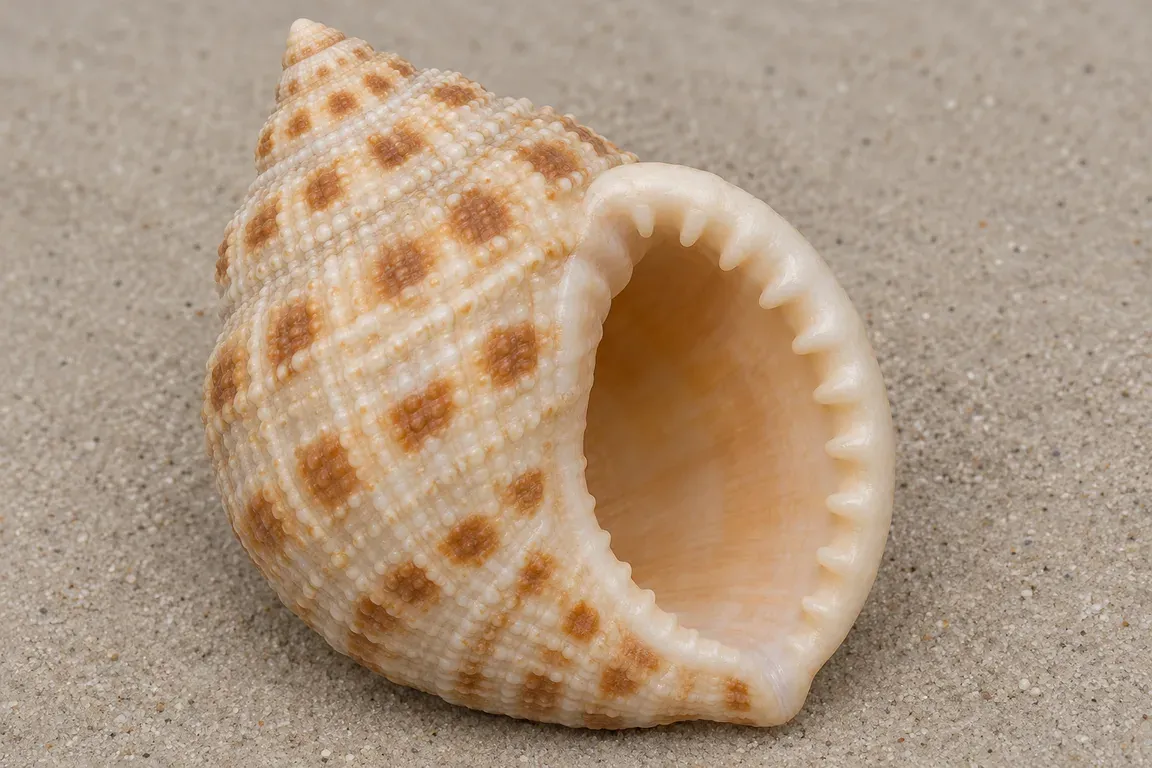
A generated illustration of a Scotch bonnet. The toothed lip is visible along the opening.
What changes with the seasons
Winter storms can wash ashore a wider mix of shells along the North Carolina coast. Tropical storms in summer and fall can do the same. A beach may look bare right after a storm, with shells washing in over the next few days as waves ease. NC Shell Club’s guide to shelling in North Carolina describes that pattern.
On a calm spring or summer day, look closely for small shells and fragments on sand exposed as the tide falls. At Fort Fisher, the Shell Club singles out small shells as a good target on an ordinary summer day. The season gives you a sense of when the mix might change. The tide and recent surf help you decide where to look on the day you go.
When to go and when to turn back
Use the NOAA Tides & Currents station lookup before you leave. Find a station that represents the ocean side of the beach you’re visiting. A nearby river or sound station can show different times. Select the date of your walk and choose NOAA’s local time setting, labeled LST/LDT. A lower predicted tide may expose more sand, while wind and surf can change how much walking room you have.
Check the National Weather Service Wilmington forecast and look at beach warnings when you arrive. If waves are reaching the stretch you meant to walk or there isn’t a continuous strip of dry sand back to the crossover, turn around. After a storm, check that the beach is open and conditions have settled before going. The Wilmington winter trip guide has other ways to spend the afternoon if the forecast changes.
What to leave on the beach
Leave shells with any sign of an occupant where they are. A shell may contain a snail or a hermit crab even when you can’t see the animal from above. Keep the walk on open sand and leave shells embedded in dunes or inside fenced areas undisturbed.
At Fort Fisher, leave empty shells in place. North Carolina’s state park rules protect park resources, including animals and their products. Check with the park office at 910-458-5798 before removing any empty shell. At Wrightsville Beach, read the signs at the crossover and ask the department that publishes the town’s beach rules at 910-256-7945 whether collecting is allowed on that stretch and whether there are limits.
A last look before the crossover
On the way back, pick one patch of open sand near the access and see how many different shapes you can spot without moving anything. Photograph the one you’d like to look up later, then head back by the crossover you came in on. If the only find was a worn half shell, you can still check where the hinge sat and see how much it tells you.